Pay attention to:
- people's lifestyles and living conditions in hunter-gatherer communities
- the reasons why people began to cultivate the land
- the changes brought about by agriculture, such as permanent settlements and the division of labour.
The modern human species (Homo sapiens) emerged in Africa around 200 000 years ago. Other human species coexisted with modern humans around 100 000 years ago: Homo erectus, Homo floresiensis (fossil finds in Indonesia), Homo denisova (Siberia), Homo luzonensis (Philippines), and Homo neanderthalensis (Europe).
Homo neanderthalensis, one of the first modern human species, became extinct about 28 000 years ago. They lived about 230 000–28 000 years ago in Europe, the Middle East, and Western Asia. They were muscular, sturdy, short-limbed, and had coarse facial features. They had a fairly short physique, and apparently had some kind of spoken language. Neanderthals hunted large game animals, used their skins for clothing, lived in social groups, and made tools.

The disappearance of Homo neanderthalensis remains a puzzle for researchers. Many theories have been put forward to explain what happened. One theory is that Homo sapiens displaced Homo neanderthalensis because the available resources (food and living space) were insufficient for both species. Modern humans had more effective hunting tools and dwellings, giving them a better chance of survival and reproduction. It has also been suggested that the domestication of dogs gave modern humans a competitive advantage in obtaining food.
Researchers have also been interested in encounters between the two species, and whether they interbred. Comparing the DNA of the two species has revealed that 1–2% of the DNA of Homo sapiens may have come from Homo neanderthalensis. This suggests that our ancestors reproduced with Neanderthals and produced fertile offspring.
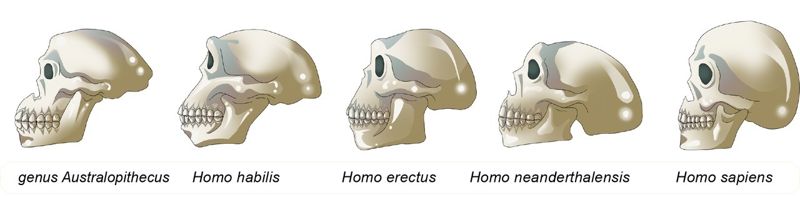
Modern humans (Homo sapiens) hunted the easiest prey available at each area they inhabited. In cold regions, modern humans hunted mammoths, whereas in Western Europe, they hunted horses. In the north, game animals such as deer were an important food source. More efficient methods of hunting fish and seals were developed in coastal areas. Despite these developments, gathered foods like berries remained a key part of the human diet.
The first human communities lived a nomadic lifestyle, following food sources. They moved according to the movements of animal herds and had a few regular campsites as well as a more permanent central one. The first human communities were small, consisting of only a few dozen people. Both men and women participated in food acquisition. Men focused on hunting, while women focused on gathering plants. Both sexes contributed significantly to food acquisition, making the communities fairly egalitarian.
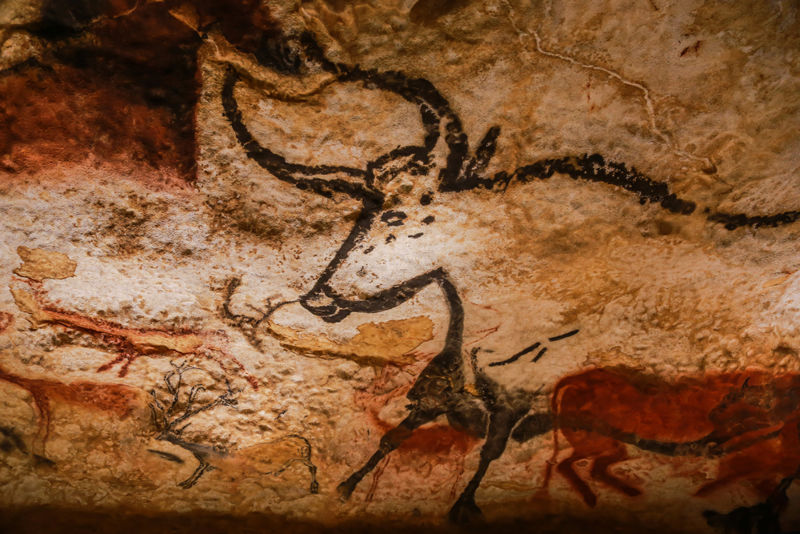
In the most fertile areas, food gathering took up only a few hours per day, leaving people with more time to develop a more advanced culture. Singing, dancing, painting and the production of decorative items were all part of everyday life from a very early stage.
Prehistoric rock paintings and carvings have been found in numerous locations around the world. The most extensive collection can be found in the Lascaux region of France. The cave paintings of Lascaux depict people and animals. Abstract patterns have also been painted on the rock. As most of the paintings depict animals, researchers have interpreted the images to be related to hunting. They may have served as instructions for other members of the community and future generations. However, the paintings also include animals that were not hunted, suggesting that the images also served a ritualistic purpose.
It has not been possible to determine precisely when prehistoric humans first started using fire. Some estimates suggest that they were using it as early as a million years ago, but the earliest conclusive evidence of fire-making dates back to about 400 000 years ago.
Initially, people exploited forest and grass fires caused by lightning strikes. Later, fire was produced with methods that used friction.
Humans benefited from fire in many ways. It provided warmth and protection from wild animals during the evening and the night. It also made efficient cooking possible. In addition, the heat of the fire helped to kill bacteria and parasites, thereby improving human health.
Fire could also be used for hunting large game animals. For example, setting grass fires could be used to drive the animals in the desired direction.
People used to spend their free time gathered around the campfire, which strengthened community spirit. Singing songs and telling stories around the campfire has probably been an important pastime for people for a long time.

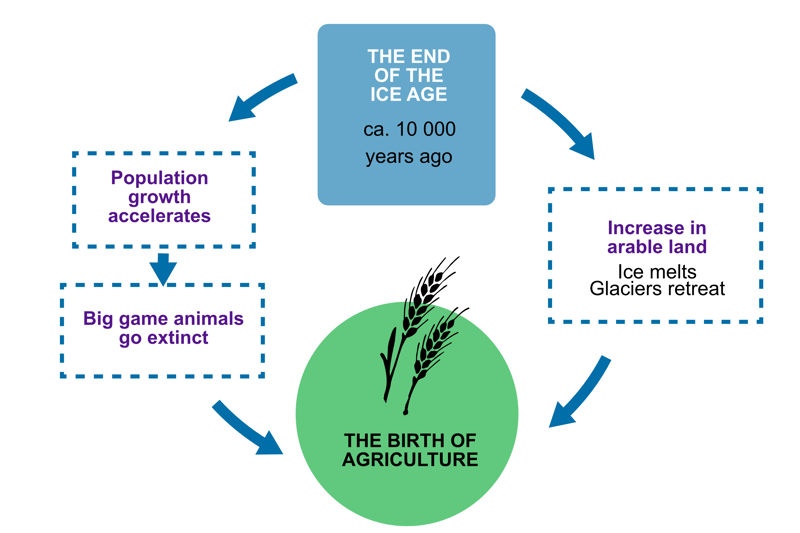
There is much debate about why humans transitioned from a hunter-gatherer lifestyle to agriculture. One theory suggests that global warming caused vast forests to disappear, thereby reducing the population of game animals.
For a long time, agriculture and hunting-gathering were practised alongside each other. In some areas, people utilised both methods, spending part of their time farming and part hunting. Gradually, however, agriculture became the main livelihood of human communities.
Agriculture provided a more reliable and stable source of food than hunting and gathering. For example, in the Fertile Crescent, a region which covers parts of modern-day Iraq, Iran and Turkey, people learned to make effective use of wild barley and wheat. These cereal crops could be harvested several times a year, providing plenty of food for growing communities.
Abundant wild grain harvests encouraged the development of inventions that made harvesting grains easier. According to archaeologists, the earliest sickles and threshing stones date back to around 11 000 BCE.
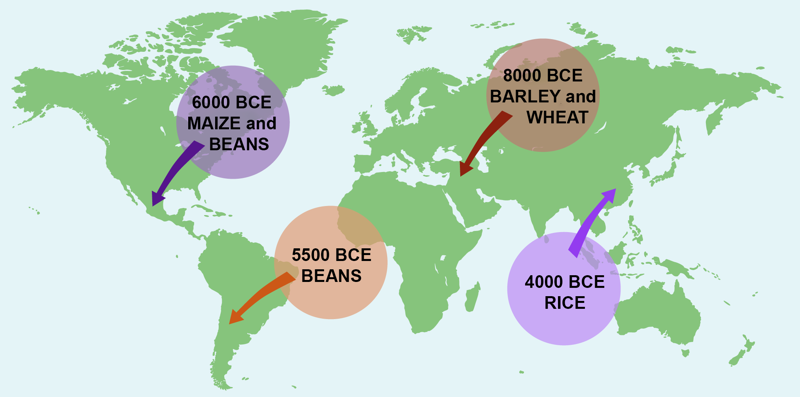
In the Fertile Crescent, sheep and goat meat formed part of the diet as early as 10 000 BCE. Increased grain harvests, supplemented by milk and meat from domesticated animals, created the conditions necessary for a growing population. Over time, the habitats of hunter-gatherers declined, and agriculture supplemented by animal husbandry became the main livelihood of humans around the world.
Settling in one place rather than moving around led to social changes within the first agricultural communities. Researchers have speculated that women were initially responsible for farming, as they were more familiar with various food plants. As these communities developed, men took responsibility for farming and livestock management, while women were responsible for tasks related to the home, such as grinding grain, caring for children and maintaining the household. The demanding work of harvesting required everyone who was able to work to contribute. Over time, work done outside the home came to be valued more highly, leading to the creation of patriarchal societies that emphasised male power over women.
Societies based on permanent settlement created new tasks. The production of a sufficient surplus of food meant that some members of the community were able to focus on activities other than farming. People who could write were needed to manage the storage of the surplus grain.
Even in hunter-gatherer communities, there had already been people who specialised in communicating between the spiritual and earthly realms. In Mesopotamian and Egyptian societies, religious life became more structured and widespread, giving rise to the need for priests. The Mesopotamians, for example, had gods dedicated to justice and love, as well as to more specialised pursuits such as basket weaving and leatherworking. The existence of gods dedicated to various professions indicates the emergence of a new class of artisans.
As is the case today, early societies required various everyday tools and objects that could only be produced by specialised professionals. Apprentices acquired these skills by training under a master craftsman. Developing these skills took a long time, and professions were often passed down from one generation to the next.
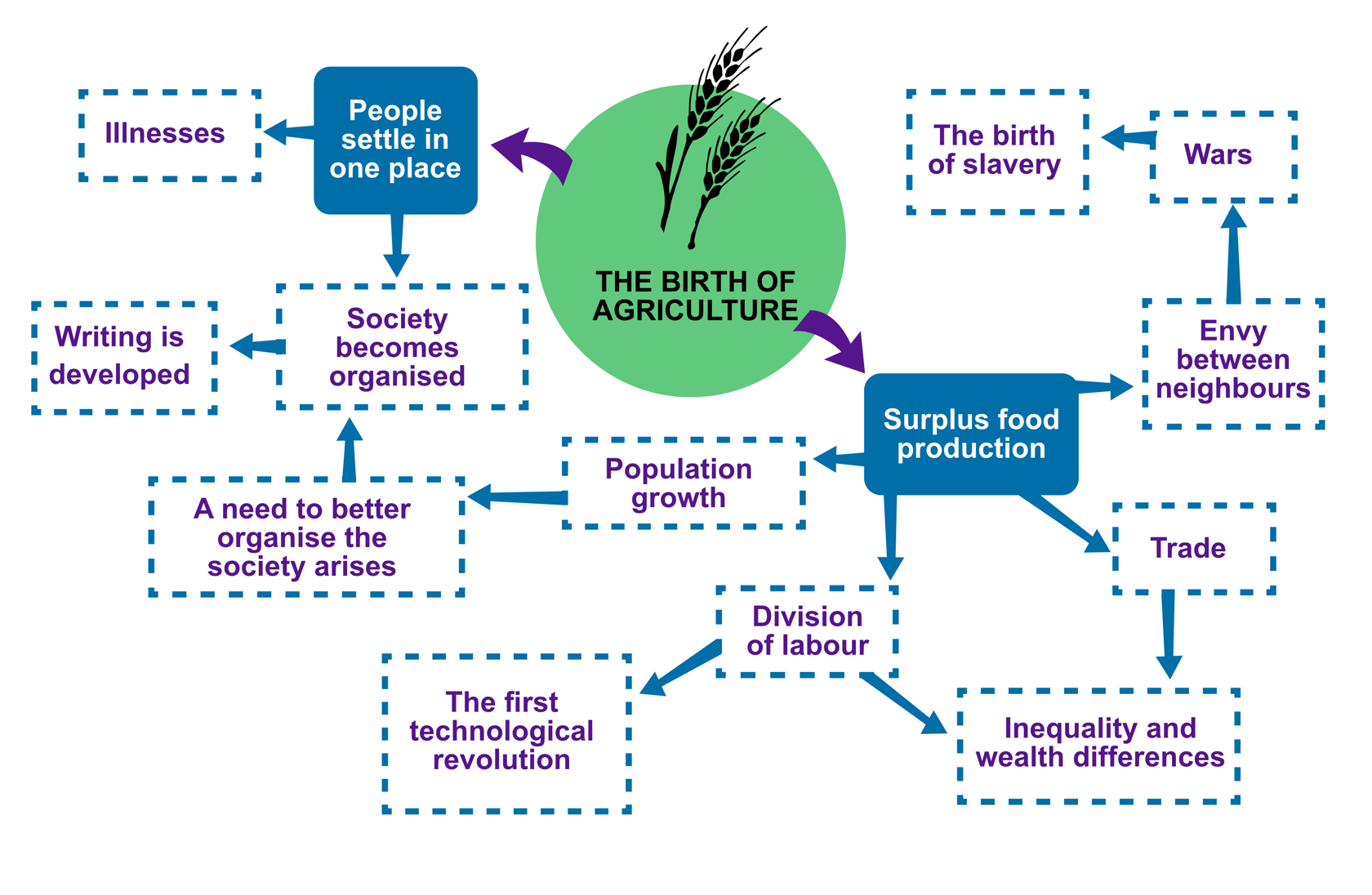
The transition to agriculture as the main livelihood of human communities had several consequences. The transition from hunting and gathering to agriculture was a significant step in human history, which is why the period when this change occurred is often called the Neolithic Revolution[term: Neolithic Revolution – A shift from hunter-gatherer communities to agriculture that took place around 10 000 years ago.].
The prerequisite for the transition to agriculture was for the cultivated area to yield more than the local population consumed. This surplus food could then be used to purchase products from merchants outside the community that could not be produced locally. Several new crafts emerged in agricultural communities, including blacksmithing and pottery making. Such roles often required long periods of training, leaving little time for working the fields.
In hunter-gatherer societies, all members were essentially equally wealthy or equally poor. However, with the advent of agriculture and trade, wealth disparities began to grow. Some merchants and craftsmen became more successful than others. They were able to acquire items that emphasised their social status, such as jewellery. The accumulation of wealth could, in turn, arouse envy among inhabitants of neighbouring areas, encouraging raids on neighbouring communities. These raids could escalate into prolonged wars in which communities and cities took turns to attack each other, destroying property and taking prisoners. These wars often resulted in the enslavement of subjugated peoples.
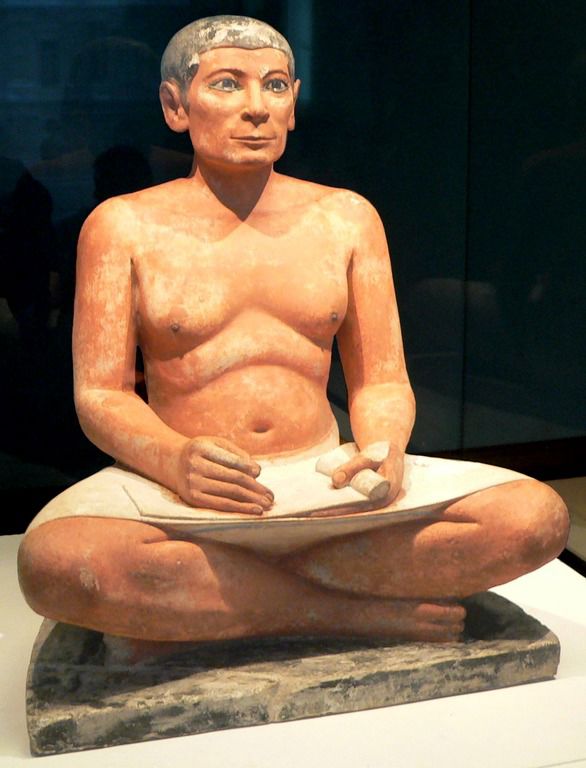
New types of tasks began to emerge within agricultural communities. Foremen were required to oversee the sowing and harvesting of cereals, as well as ensuring that the grain was stored properly. The need to store and manage surplus grain in turn required bookkeeping, and the profession of scribe became highly respected.
Farming communities supplemented their diet with meat and milk from their domestic animals. Sheep, cows, goats and pigs played an important role in the agricultural societies.
However, the close contact between humans and animals also created favourable conditions for the spread of new diseases. Smallpox, measles and influenza spread from animals to humans, causing an increase in the human mortality rate.
1. Why did farming replace hunting and gathering as the main livelihood of human communities?
2. Where did agriculture first develop?
3. Which of the following was not a result of the development of agriculture?
Mitä haluat tehdä tekstillä? Teksti käsitellään tekoälyn avulla, eikä sitä sen jälkeen muokata tai tarkisteta. Tekstissä voi esiintyä virheitä. Tarkista tekstin oikeellisuus vertaamalla sitä kirjan alkuperäistekstiin.
Valitse tiedostot, jotka haluat lisätä. Tuetut formaatit ovat txt, html, htm, pdf, odt, odp, ods, xls, xlsx, ppt, pptx, pps, doc, docx, rtf, png, jpg, jpeg ja gif.
| Nimi | |
|---|---|
| poista |
Huom.! Linkkien tulee alkaa ”http://”!
Opiq käyttää verkkosivun toiminnan, turvallisen käytön varmistamisen, käytön analysoimisen ja parhaan käyttömukavuuden tarjoamisen edellyttämiä evästeitä.
Eväste on käyttäjän tietokoneelta verkkosivun palvelimeen lähetettävä pieni tiedosto, joka sisältää verkkosivun toiminnan edellyttämiä käyttäjää ja hänen tekemiä valintoja koskevia tietoja.
Isoin osa evästeistä ovat Opiqin toiminnan kannalta välttämättömiä. Analyyttisistä evästeistä voi luopua ja silloin ei sinun käyttötietojasi ei käytetä Opiqin kehittämiseen. Lue lisää