The art of thinking
People think all the time, but there are many different types of thinking. You can live your life without thinking independently or producing many thoughts of your own. Simply noticing ideas that pop into your mind is not yet thinking. Repeating thoughts picked up from elsewhere lacks the independent activity and reflection that turns random ideas into thoughts. People think much less often than they realise: although thoughts and memories flow through the mind effortlessly, thinking requires conscious effort. The world around us is full of all kinds of claims and beliefs, so it is important for people to learn to evaluate them critically. People constantly rely on habitual thoughts that are rarely questioned.
The Finnish politician and thinker Yrjö Källinen (1886–1976) characterised thinking as follows: "Reflection that follows conventional, habitual paths is not reflection that breaks down old patterns and liberates new ones, even if it continues for a thousand years and is practised by the most talented minds." According to Källinen, most people never think for themselves, but instead let their society think for them. They inherit a set of thought patterns from their culture and upbringing, which they then organise. However, this organisation does not necessarily constitute actual thinking. Most people's belief systems are the result of their upbringing and surrounding community, and critically evaluating one's own ways of thinking can be difficult and uncomfortable.

Above all else, thinking requires courage. It requires the strength to break free from outdated ways of thinking and embrace new insights and the conclusions derived from them. Taking things through to their logical conclusion can easily lead to dangerous territory. This can make you want to stop and return to what is familiar and usual.
Even more courage is required to express the results of one's thinking. Belonging to a community usually involves repeating what everyone else says. If one's own thoughts have led to a different conclusion, sharing them can feel risky.
The purpose of studying philosophy is to train your mind. Thinking is a skill that can be learned. Through skilful thinking, we can discover our own interpretations of the world and life, or at least determine which of these interpretations are justified. As your thinking becomes more refined, you also become more independent. Philosophy develops thinking skills and provides conceptual tools to support independent reflection.
Ideals of philosophical thinking
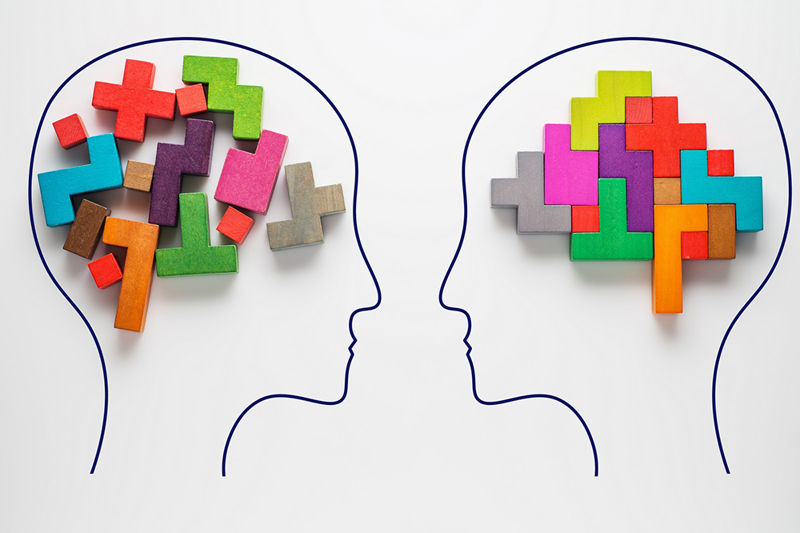
The key principles of skilful thinking are criticality, questioning, consistency and creativity.
Critical thinking[term: critical thinking – The practice of constructing judgements about things through thinking about them. Nothing should be accepted as true without careful consideration. Criticism may be directed at either the form or the content of an argument.] involves considering issues from different perspectives, evaluating arguments used to support claims and, if necessary, changing the way we think about the issue. It also involves dismantling and rebuilding ingrained habits and ways of thinking that are often taken for granted.
Philosophy requires its practitioners to be open to new ways of thinking and acting. In philosophy, inherited assumptions must be critically examined. This is linked to the discipline's questioning nature. Examining and evaluating arguments from different perspectives is crucial, but jumping to conclusions or dismissing issues outright is not. For instance, criticism of immigration is sometimes based on prejudices and false beliefs rather than a critical examination of the issue.
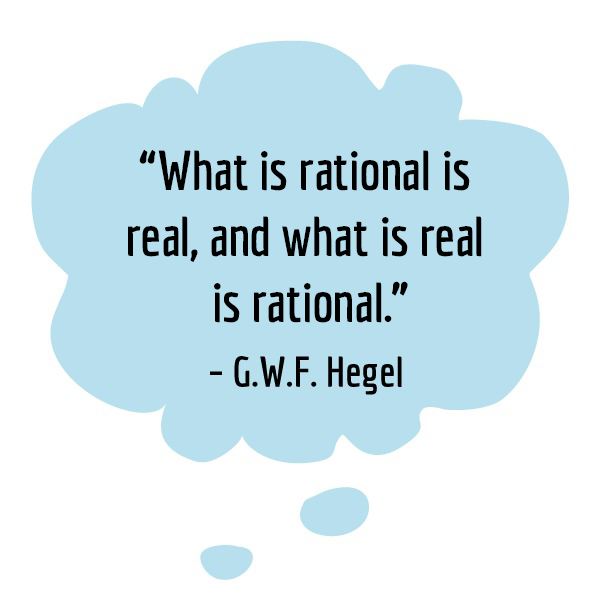
Philosophy also emphasizes the importance of reason as a foundation for clear thinking. Reason enables us to organise things logically, identify patterns, and categorise the features and characteristics of reality. However, the ability to recognise factors that affect the truth of an argument, search for reasons and strive for logical reasoning requires practice. Although reason is not the whole of life and life is not always rational, everything can be thought about rationally. One's own opinion or preference can never be a criterion of truth or a sufficient justification for a claim.
Consistency means that the arguments presented are compatible with each other, and that they can all be true at the same time. For example, consistency of thought requires that one cannot simultaneously support equality and seek to deny fundamental rights to a particular group of people. Consistency involves the compatibility and meaningfulness of the whole formed by chains of arguments and justifications; a consistent argument is coherent and sound. Consistency also involves the ability to distinguish between the components of thoughts and justifications (analysis[term: analysis – Analysis involves breaking a whole down into its constituent parts to gain a more precise understanding of it. It is a common tool in philosophy, science and argumentation. It is considered the opposite of synthesis, which aims to bring different elements together.]). Every worldview, ideology, belief and way of thinking can be broken down to its roots.
Everyone's thinking can contain unconscious inconsistencies. For instance, we may be too hasty in drawing broad conclusions about people based on our experiences, or we may be reluctant to apply a way of thinking from one situation to another. Developing thinking skills requires us to become aware of these tendencies.
Creativity is often associated with intuitive thinking, which can open new avenues for thought. The ability to combine parts of thought and concepts to create new overall pictures of things is necessary.
To develop a thought process, it is necessary to gather information from various areas of reality, as well as general knowledge and time to contemplate things. Information produced by the arts and sciences can support the development of philosophical thought structures. In turn, philosophy can help to compile the results of specific scientific fields into a coherent worldview through synthesis.
Understanding the key questions and responses in the history of philosophy lends philosophical depth to one's thinking. Understanding philosophical debates from different eras can inform one's own thinking. With sufficient knowledge, it becomes easier to think skilfully and find deeper, more meaningful interpretations of the world.
It has been said that the unconscious mind thinks in emotional images, whereas the conscious mind thinks in concepts. Philosophy, however, focuses on conceptual thinking. Concepts are the foundation of all philosophical thought. Conscious thinking is a disciplined process.
Wondering and questioning
Philosophy has two possible roots: wonder and crisis. Philosophical thinking can begin with a sense of wonder, which leads to questions and attempts at answers. These questions should lead to new ideas. Strange and surprising questions can reveal a fresh perspective — the seed of truth. Philosophy has always sought big, stirring questions and small, important ones.
A crisis, on the other hand, describes a situation in which traditional explanations are unsatisfactory. Philosophy was used to critique and improve the lives of societies when expanding trade began to challenge their traditional ways of life.
Wonder and crisis that raise questions and prompt attempts at finding answers. What is life ultimately about? Which goals are worth pursuing, and what means are acceptable for achieving them? Philosophy evaluates established customs and self-evident truths
Questions help us to learn new things and push our thinking forward. However, simply asking questions is not enough. They must inspire attempts at answers, which in turn force us to ask new questions. Thought is driven by the interplay of questions and answers, developing understanding and breaking down preconceptions. One of philosophy's tasks is to encourage people to immerse themselves in the flow of thought without prejudice.
Philosophy is never satisfied by stating that not everything can be explained and leaving interesting questions unasked. Everything can be thought about rationally, whether or not sufficient explanations are found. While science seeks to explain how the world works, philosophy asks what the world is like, why it is the way it is, and how it should be. Why are we here? What is essential and important? Philosophy also evaluates science, asking how reliable information can be obtained.
The most well-known philosophical questions are eternal questions that have appealed to people throughout the ages. What constitutes a good life? What is death? What is right and what is wrong? While these questions remain eternally interesting, others are products of their time and simply cease to be of interest. Each era also produces questions that are interesting in their own right.
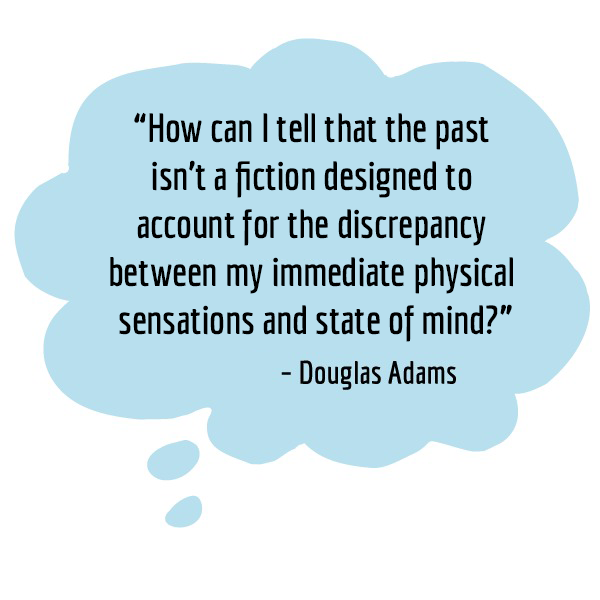
Studying the history of philosophy improves thinking skills. However, many of the problems and theories that emerged from the ancient world and the Enlightenment are difficult to understand correctly. Over time, many questions have become so complex that answering them requires extensive specialised philosophical knowledge. Knowledge of the history of philosophy helps us to understand the significance of fundamental questions that may initially seem absurd. For instance, someone might ask whether the universe is only made up of an individual's states of consciousness and sensations. Readers familiar with the history of philosophy will understand the background to this question. According to a view called solipsism[term: solipsism – A philosophical view which states that one's own perceptions and sensations are all that exists. One cannot know for certain whether there are entities that exist independently of oneself, because one can only perceive other entities through their own perceptions.], the only things that exist are the states of consciousness and sensations of the conscious self. This question was originally related to the nature of knowledge, as humans cannot observe the world outside their own perceptions. Underlying this was the question posed by scepticism[term: scepticism – A philosophical position that emphasises doubt and questions the possibility of knowledge.] about the nature of certain knowledge. The possibilities of knowledge were explored on the basis that humans can only ever be certain of the existence of their own perceptions.

Philosophical problems
A philosophical question outlines the problem or problems to be considered. Philosophical problems are usually open-ended, with no immediately apparent answer and often no single correct response. Studying human behaviour is one thing, but pondering whether humans have free will is quite another. Similarly, it is one thing to study natural phenomena, and quite another to ponder the very possibility of knowledge. Traditional philosophical problems are unsolvable, yet worth pondering. If an answer can be found through observation, the question is not philosophical. Even the direction in which the answer should be sought is not always clear. A philosophical problem may initially remain unanswered, raising new questions instead. The solution must be consistent and take many different perspectives into account. Not all answers are equally valid because the reasoning behind some of them may be less sound than those behind others.
Scientific research enables us to observe reality and attempt to explain the cause-and-effect relationships that we observe. In this case, we seek answers to concrete, precisely defined and unambiguous research questions, utilising observations and experimental research designs. In other words, research problems must be testable through research.

In philosophy, however, reality is examined conceptually. Unlike the special sciences, philosophy does not have a limited field of study – almost any subject can be examined philosophically. While science can determine the health benefits of different lifestyles, philosophy questions what the concepts of health and benefit mean. As people often justify their choices based on usefulness, it is appropriate to consider the concept of usefulness. Many concepts raise philosophical problems.
Philosophy and various scientific disciplines are united by their critical, analytical and conceptual precision. However, unlike other sciences, philosophy does not progress in the sense that the amount of knowledge grows and becomes more precise as research advances. Nevertheless, the conceptual clarification of philosophical problems and the formulation of contemporary issues also demonstrate the progress of philosophical thinking.
Questions define problems, while problems can lead to chains of questions and answers. For example, a philosopher cannot determine the meaning of truth through scientific observation alone. However, the concept of truth itself is essential. Without the ability to distinguish between truth and falsehood, communication would become meaningless, cooperation between people would be stifled by a lack of trust, and societies would collapse. We must therefore think about what is true. Philosophers can investigate what people consider to be true and evaluate the arguments presented in support of these views. For example, a philosophical analysis of existing moral concepts can be fruitful. Nevertheless, merely observing the world is insufficient to determine which concepts, problems, questions and answers are philosophically significant.
Another philosophical problem is the question of what philosophy is. The fact that philosophers have not been able to reach a consensus on this question for several thousand years is a clear illustration of the difficulty of philosophical debate. There is also no agreement on the purpose of philosophy. Philosophers are characterised by their tendency to ponder problems that seem, at first glance, to be beyond comprehension.
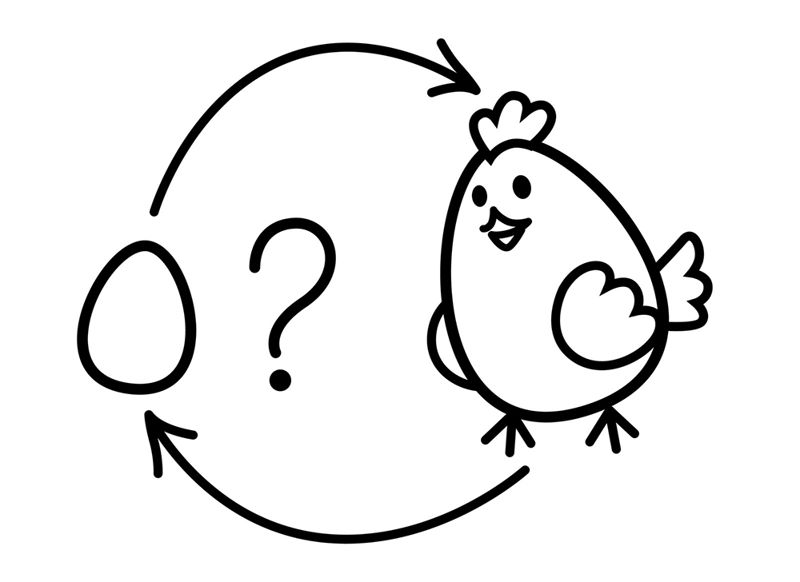
The problematic premise of philosophy could be formulated as follows: "Every problem has a solution, and every solution creates a new problem."

Big and small questions as a source of understanding
Recent developments in physics have been described as a shift from addressing big questions to addressing small ones. Once enough of these smaller questions have been answered, it will be possible to address the larger questions. For instance, the discovery of DNA helped to answer the question of what life is. The results of scientific research can inform the consideration of philosophical questions.
Scientific research demonstrates which specific issues are worth investigating and what kind of conceptual breakthroughs are required to advance research. However, from a historical perspective, conceptual shifts and changes in worldview relating to significant questions must have occurred to identify smaller questions that contribute to our research knowledge.

Traditionally, philosophy has focused on considering big, general questions. However, philosophical analysis also benefits from the knowledge gained by studying specific questions. For instance, providing credible answers to questions in the philosophy of mind requires knowledge produced by special sciences. However, building an understanding that brings together the results of scientific research requires an open mind and sensitivity to broader questions.
The benefits of philosophy
Although philosophy may sound like thinking for the sake of thinking, it has always had practical significance, too. As well as generating movement in thought, philosophy motivates the construction of a shared reality in many ways.
In ancient times, philosophy often focused on the philosophy of life[term: philosophy of life – A philosophical tradition that seeks to define the criteria for a good life.]. Ancient philosophers engaged in exercises and strove to live according to the teachings of a particular school. Eastern philosophy is similar to ancient philosophy in that it focuses on self-development. For instance, Rajayoga, a school of Hindu philosophy, comprises numerous meditation exercises designed to cultivate mental qualities. Philosophy strongly influenced the development of ancient cultures.
Nowadays, philosophy tends to emphasise academic and intellectual curiosity related to specific issues. While this does not necessarily determine everyday solutions, it does influence the formation of academic culture. Nevertheless, philosophy can still have great personal significance.
In terms of one's own life, philosophy can be a means of self-development and self-improvement. It can be applied to many areas of life, from reflecting on personal choices to solving problems at work. Of course, people can live their lives without reflecting on the world or themselves and still be reasonably content. But is it possible to live a good life[term: the good life – The good life was a central goal for the philosophy of life in antiquity. For ancient philosophers, philosophy should teach us how to live better.] without self-examination? According to Socrates, at least, a life without self-examination is not worth living. When you have a better understanding of yourself and the world, it becomes easier to trust the choices you make.


People often act intuitively in many situations, based on learned and automated patterns. This is often a good thing. However, quick thinking and intuitive reactions can also lead to cognitive biases and misjudgements. Practising philosophy can help to clarify thinking.
Philosophical thinking involves doubting, questioning, investigating and applying in the pursuit of truth. It also fosters critical and slow thinking. Slow thinking enables us to make sensible decisions in situations that require us to evaluate different options, make comparisons and come up with unpredictable alternatives. Slow thinking fosters independent thinking. Breaking away from habits, prejudices and assumptions requires a diverse knowledge base and the ability to weigh up different perspectives. One must also always critically evaluate the starting points of their own thinking.
A holistic approach supported by philosophy is beneficial to all kinds of learning. It is not possible to gain an understanding of a subject simply by conducting internet searches or asking a chatbot. Rather, piecing together fragments of information requires critical thinking skills to form a coherent whole. Mastering skilful and consistent thinking helps you to understand connections. Understanding the big picture also aids retention and application of what has been learned.

Studying philosophy also supports the development of creativity and problem-solving skills. These are precisely the qualities asked of employees in today's expertise-oriented working life. For the overall benefit of society, it is important that citizens are capable of critical thinking. A functioning democracy needs citizens who can think independently, engage with political debate and address social injustices.
The ability to critically evaluate political and economic actors and discuss social issues are civic skills required for democracy. Philosophy supports the development of general thinking and problem-solving skills, as well as discussion and civic skills.
Philosophy enhances our ability to recognise and understand the concepts underlying human thought and action. Attentive and unbiased thinking enables us to identify the blind spots, irrationalities and immoralities of our time. Slavery, for example, was once widely accepted, but a few critical individuals recognised it as a problem and began to speak out against it. Are there similar blind spots in the present day that only trained thinkers can recognise?
Thinking skills also protect against hype and extremism. Skilful thinking increases individuals' independence and their ability to make decisions about their own lives.
Key areas of philosophy
The word philosophy comes from the Greek words philia and sophia, together meaning “love of wisdom” or “friendship with wisdom”. This love or friendship is maintained through thinking, arguing, asking questions and finding answers. New explanations, perspectives and solutions are employed in the pursuit of understanding and wisdom. A wise person has broad knowledge. They mainly have well-founded beliefs about the world. They also know how to live a good life and succeed in their pursuit of it. Over time, they develop a refined character, or many virtues.
What is philosophy?
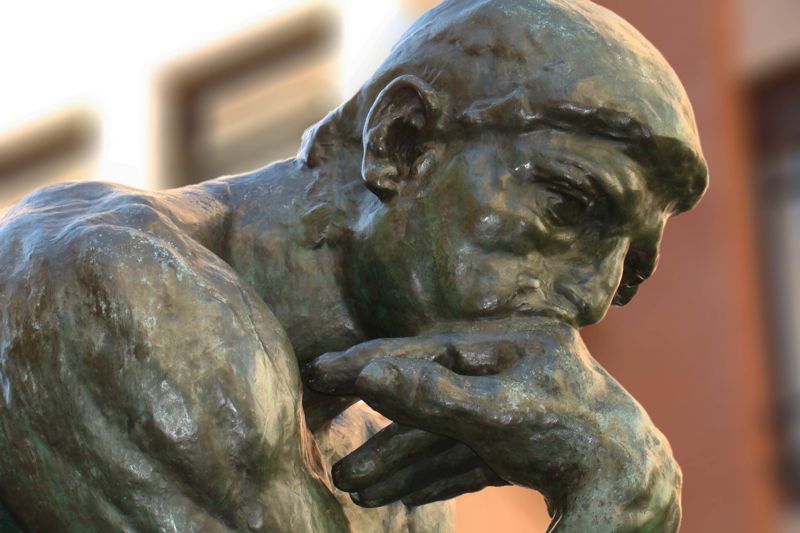
- Philosophy begins with wonder. It makes people aware of problems. These problems are then analysed, discussed and debated. The most important thing is to justify one's arguments. The purpose of philosophy is to question, break questions down into their constituent parts, and develop new questions and answers.
- Philosophy is thinking about thinking. How can we think better?
- Philosophy also deals with fundamental questions. These include life, death, good, evil, fate, justice, knowledge, the meaning of life and the structure of the universe.
- Philosophy involves defining and clarifying concepts.
- It is about revealing contradictions.
- Philosophy strives for synthesis and an overall picture.

Philosophy and religion
Religion also plays a part in finding answers to the big questions in life. Religion can provide meaning and offer individuals a sense of security. Religious and philosophical reflection have many things in common. For instance, both involve contemplating fundamental and eternal questions. Many philosophers of the Middle Ages were also theologians.
However, unlike religion, philosophy is not committed to a single worldview, nor does it reinforce faith and commitment through ritual practice. Many religions also include the concept of holy books and other doctrinal texts that act as sources of authority. Like other phenomena, religious traditions and beliefs can also be examined through philosophy. In this case, critical thinking, open discussion, evaluation and questioning become central to the practice of one’s faith.